National Industry
06.11.2025
–
11.03.2026
Iosu Aramburu
Press release
We must imagine the past in order to shape the future. Although the past is precisely what we must leave behind, it is also the substance upon which the promise of the future is built. It is an anchor and a confirmation.
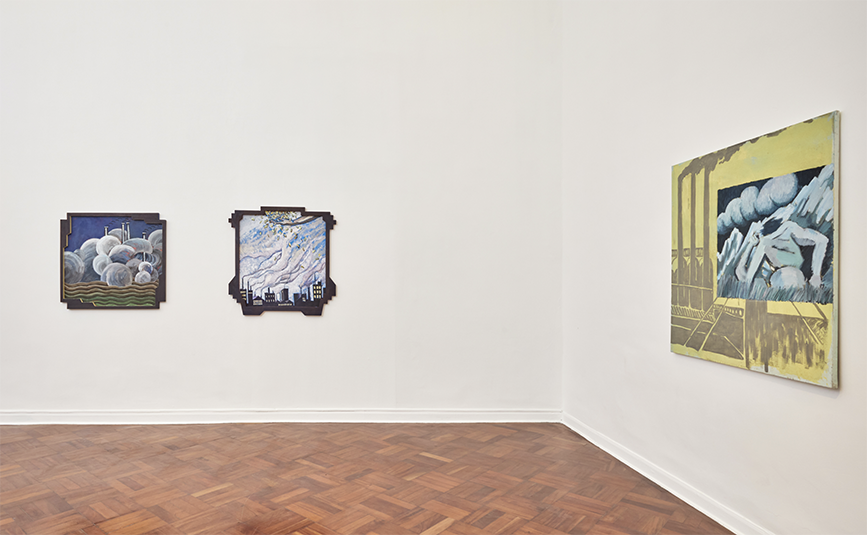
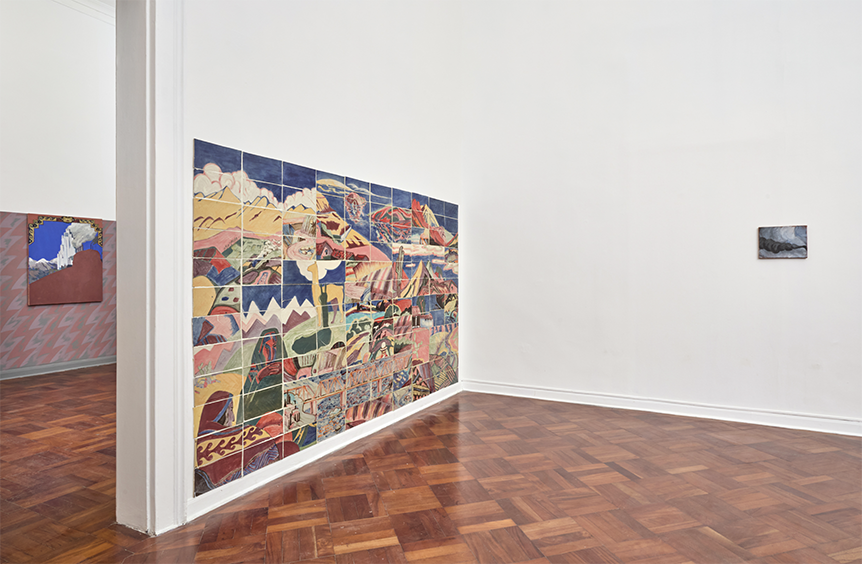
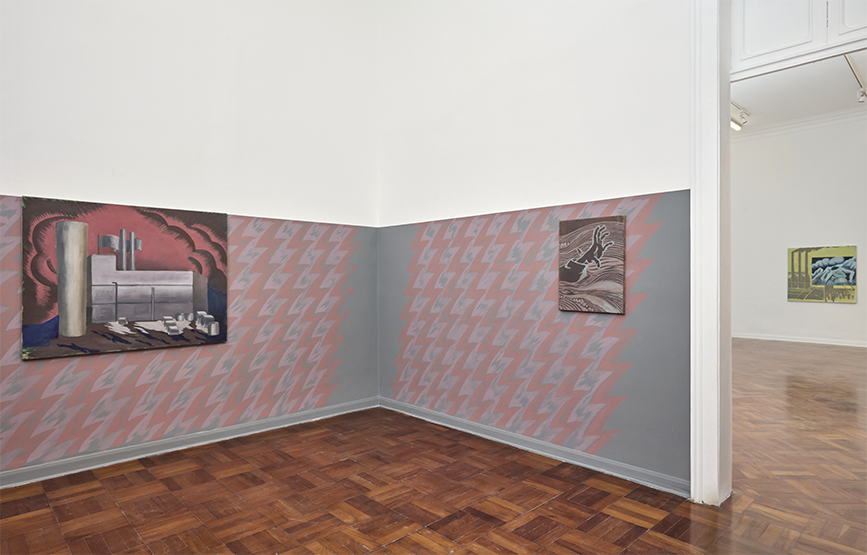
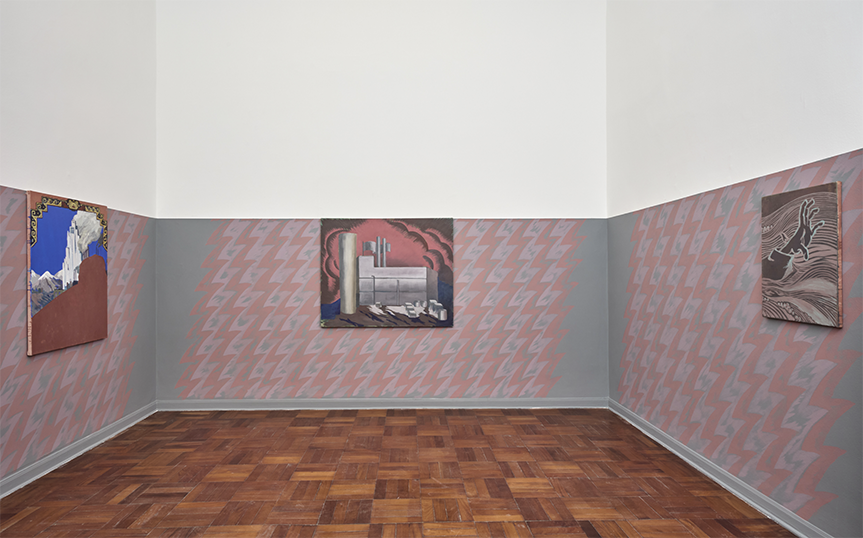
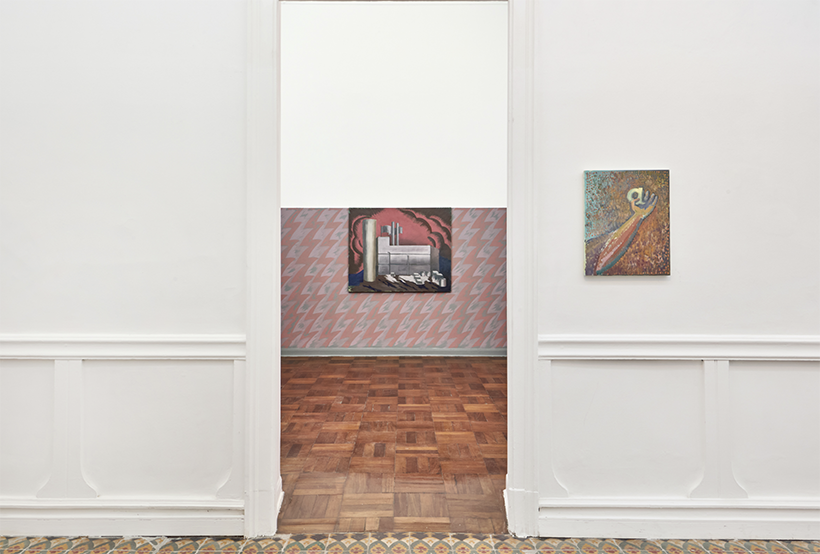
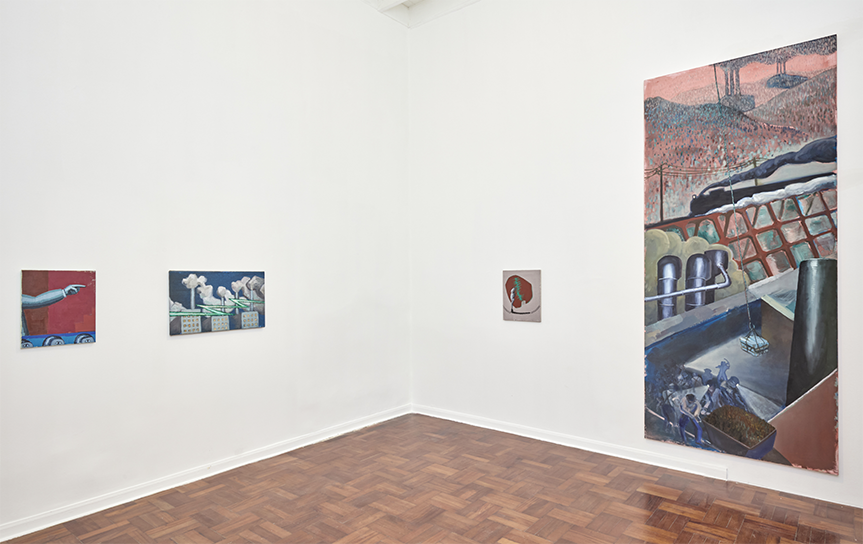
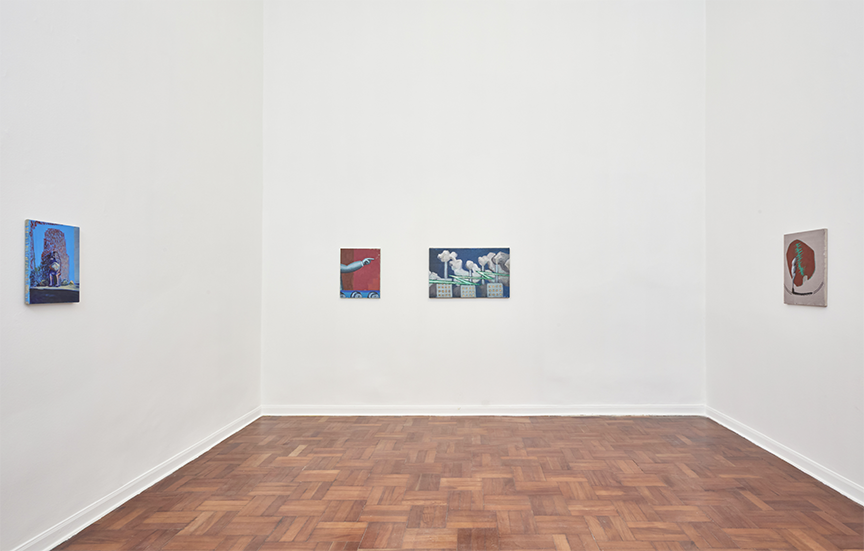
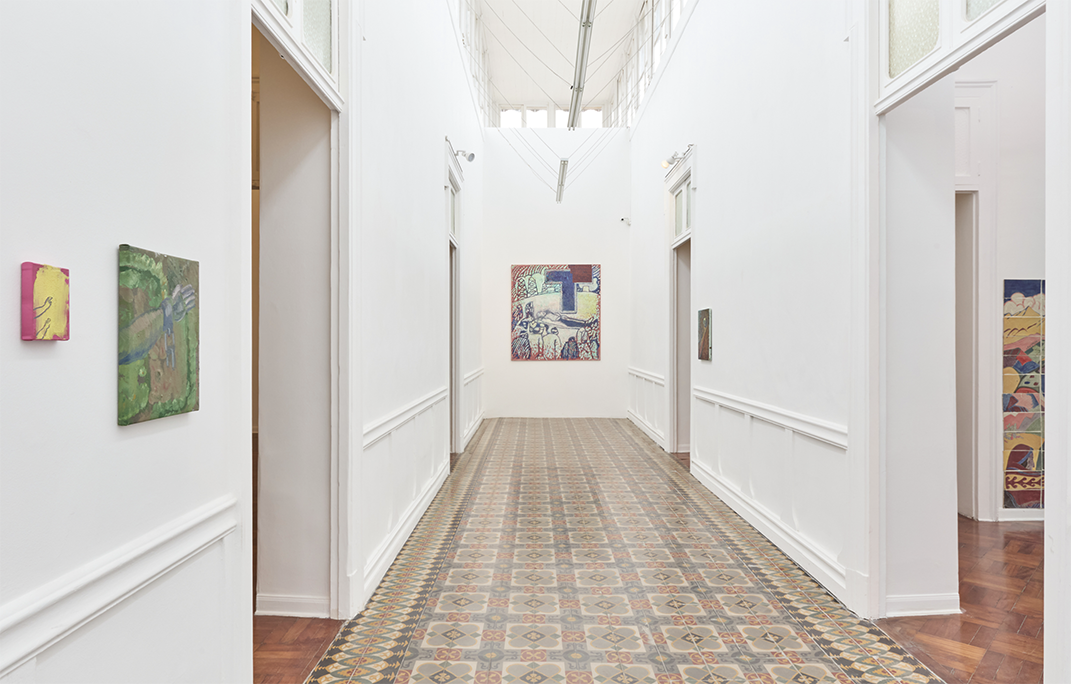
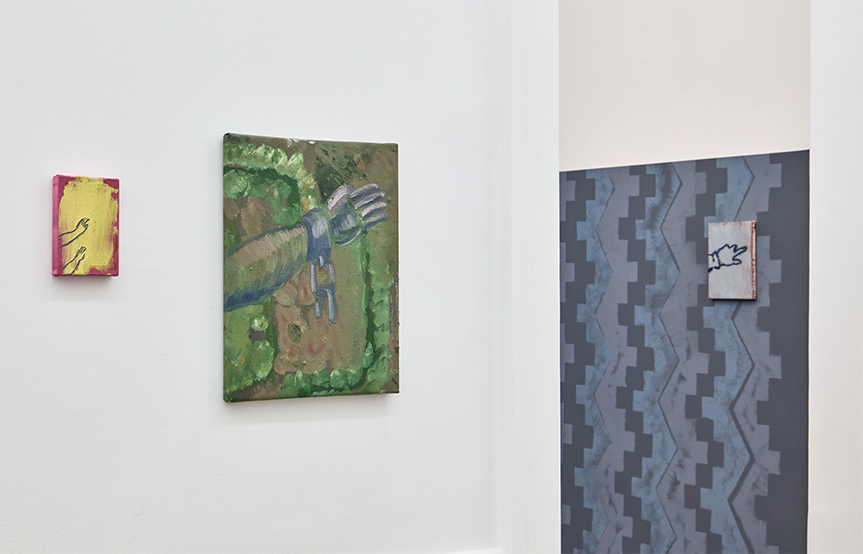
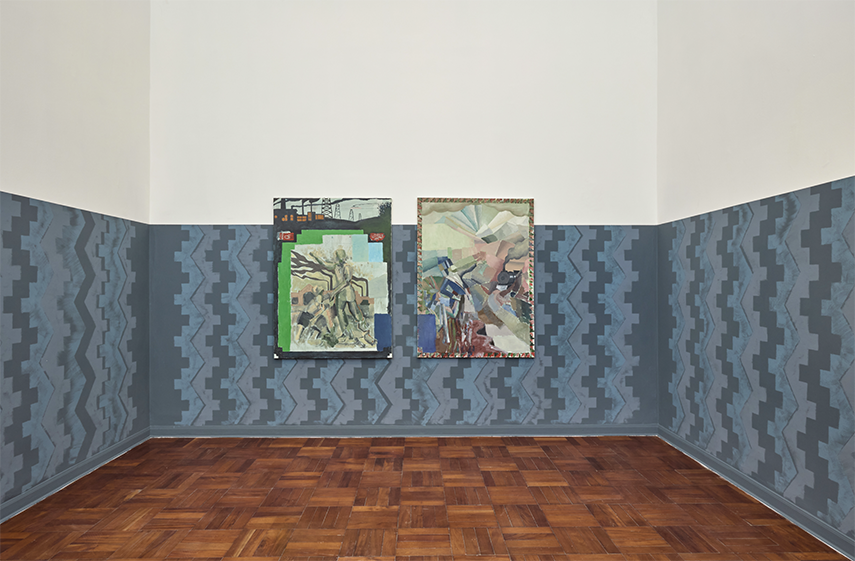
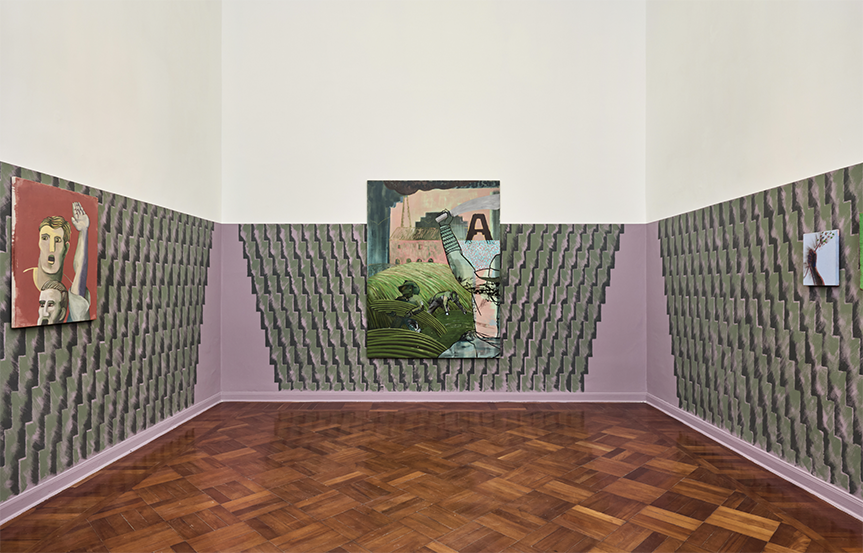
In this series of paintings, layers of time and matter overlap. They are realities that collide and come together to reveal a little-explored facet of artistic modernity, one found in illustrations and magazines, a functional and informative facet that must project a model of progress and sell resources, but whose resolution is contradictory and motley, and therefore kitsch, dense, and fluid.
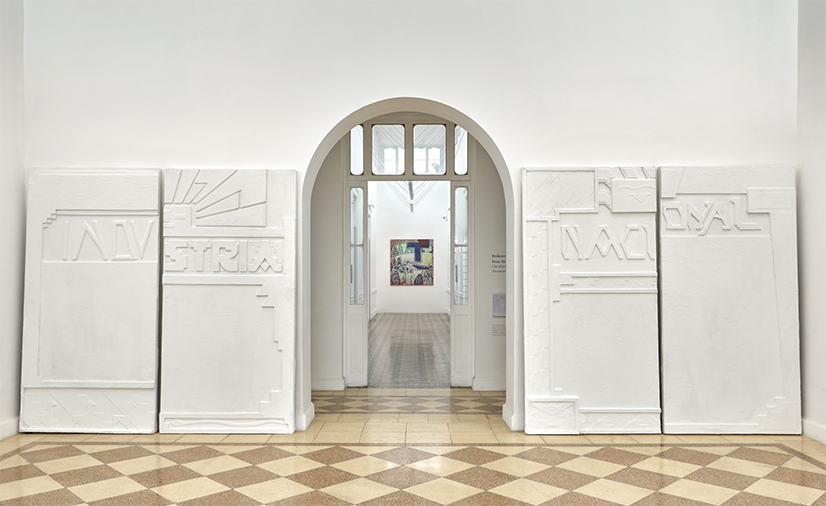
Making this density even more complex, in this series the references to illustrations are combined with works showing factories, mines, and plantations, which are disordered and reassembled, emphasizing the anachronistic contradictions that show how the model of the future is only possible if it is anchored in a pre-Hispanic past. Natural resources and the body itself are transformed into productive resources, into energy for the machinery of progress. In this transformation, the experience of modernity colonizes and dominates nature, reorganizing living beings according to the logic of utility and extraction. Thus, an unshakeable optimism emerges, the certainty of an industrial and national destiny. A model of the future designed in the 20th century that, seen and experienced from the present, is dystopian and disturbing.
Anamaría Garzón Mantilla
In this series of paintings, layers of time and matter overlap. They are realities that collide and come together to reveal a little-explored facet of artistic modernity, one found in illustrations and magazines, a functional and informative facet that must project a model of progress and sell resources, but whose resolution is contradictory and motley, and therefore kitsch, dense, and fluid.
Making this density even more complex, in this series the references to illustrations are combined with works showing factories, mines, and plantations, which are disordered and reassembled, emphasizing the anachronistic contradictions that show how the model of the future is only possible if it is anchored in a pre-Hispanic past. Natural resources and the body itself are transformed into productive resources, into energy for the machinery of progress. In this transformation, the experience of modernity colonizes and dominates nature, reorganizing living beings according to the logic of utility and extraction. Thus, an unshakeable optimism emerges, the certainty of an industrial and national destiny. A model of the future designed in the 20th century that, seen and experienced from the present, is dystopian and disturbing.
Anamaría Garzón Mantilla