Redes de conversión
25.10.2021
–
26.03.2022
Ximena Garrido-Lecca
Press release
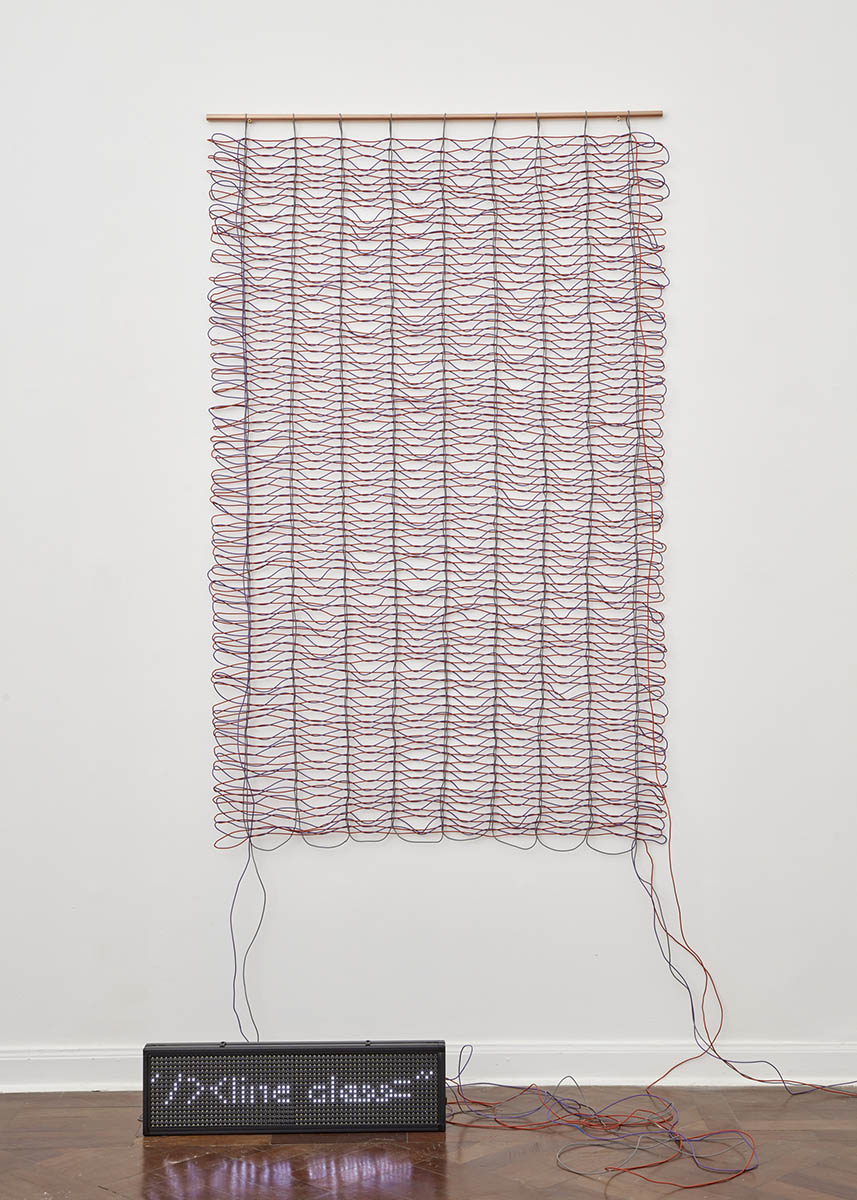
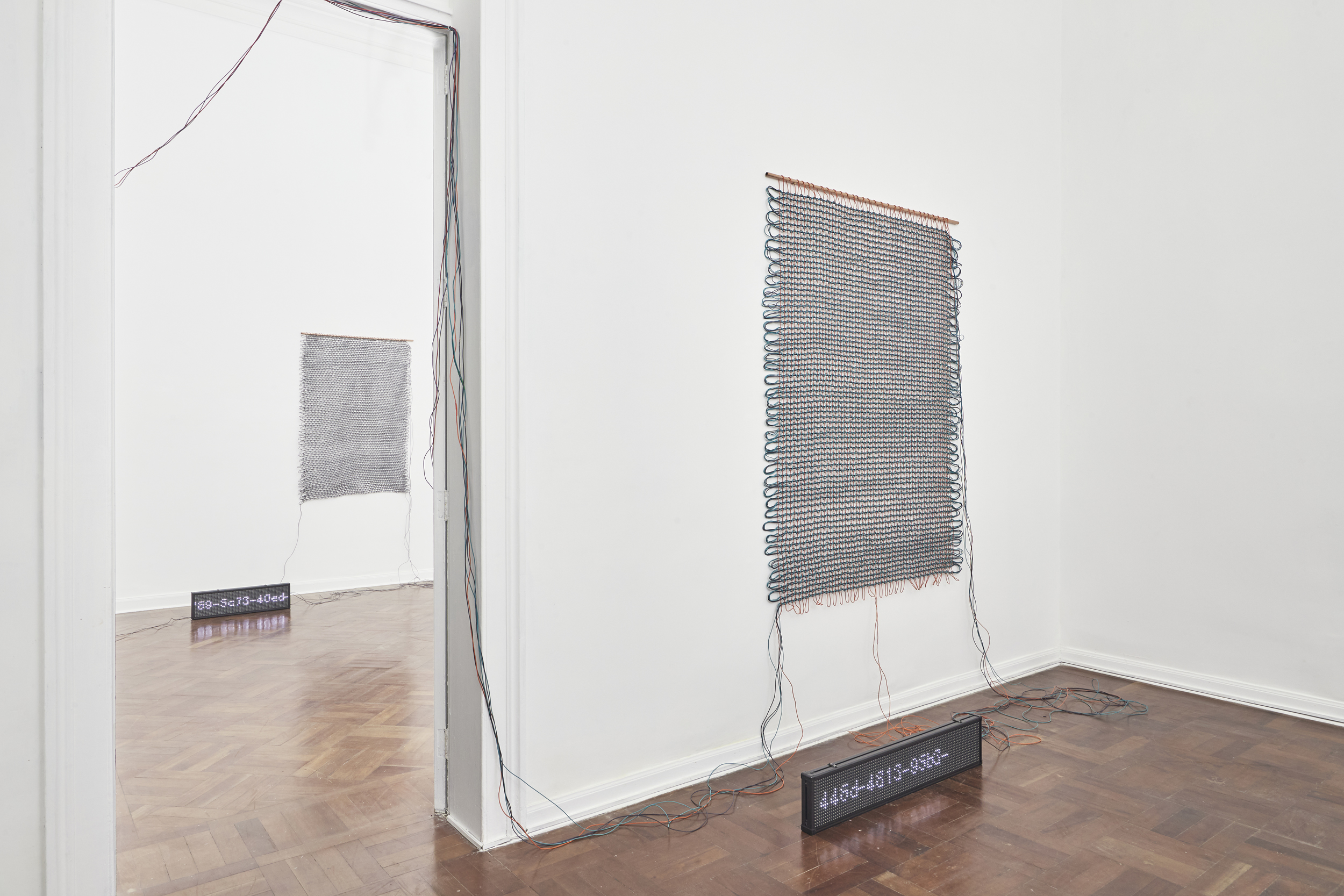
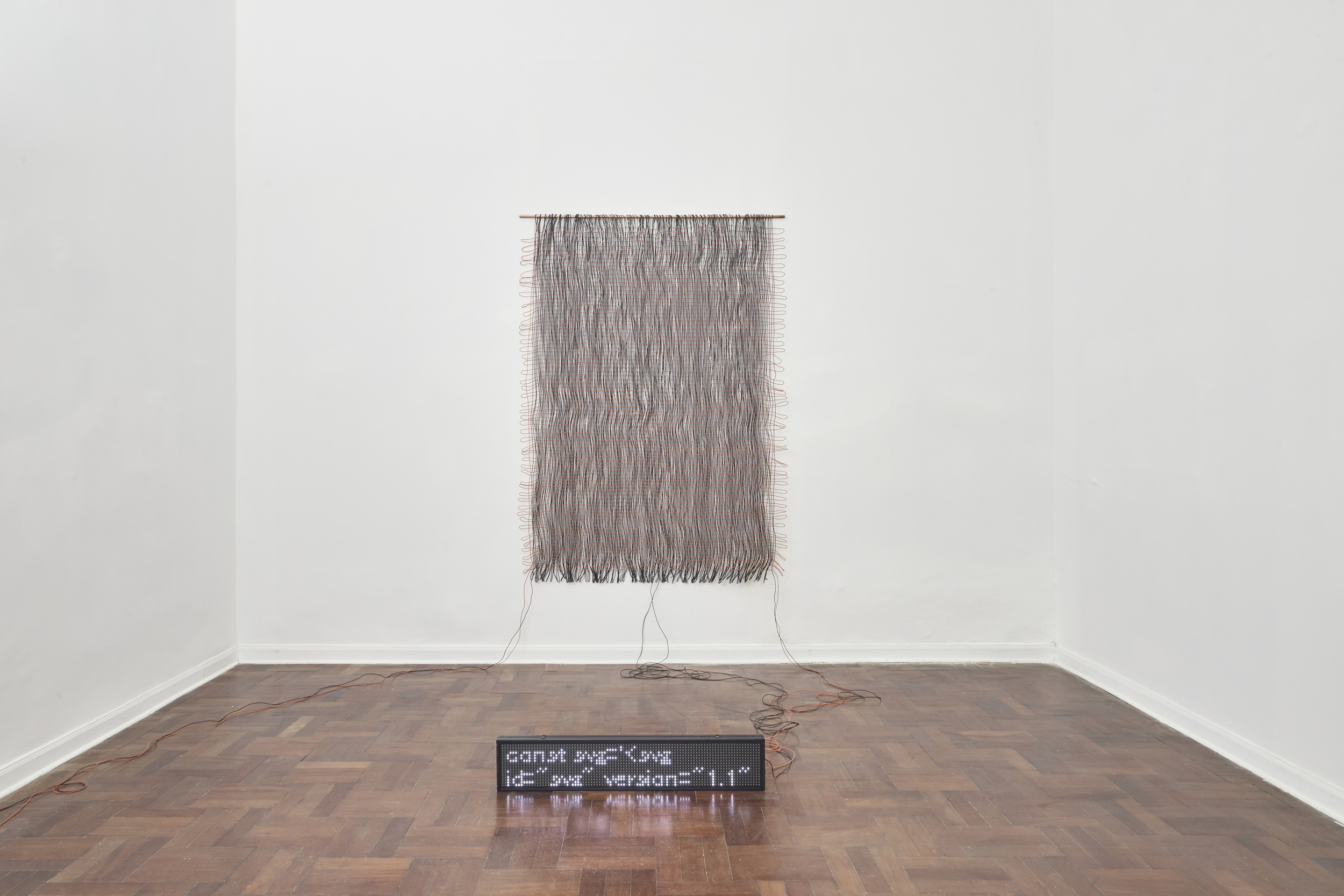
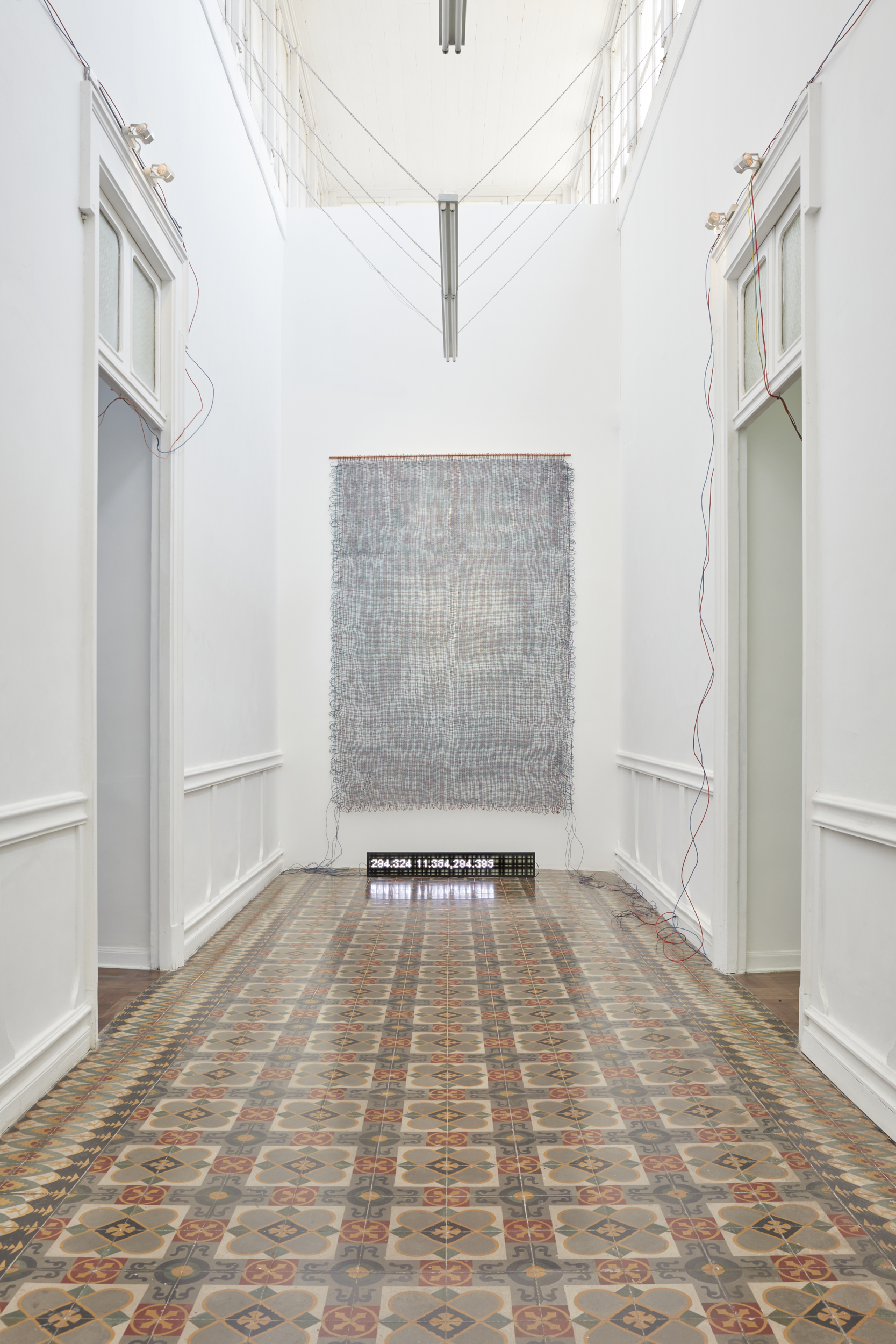
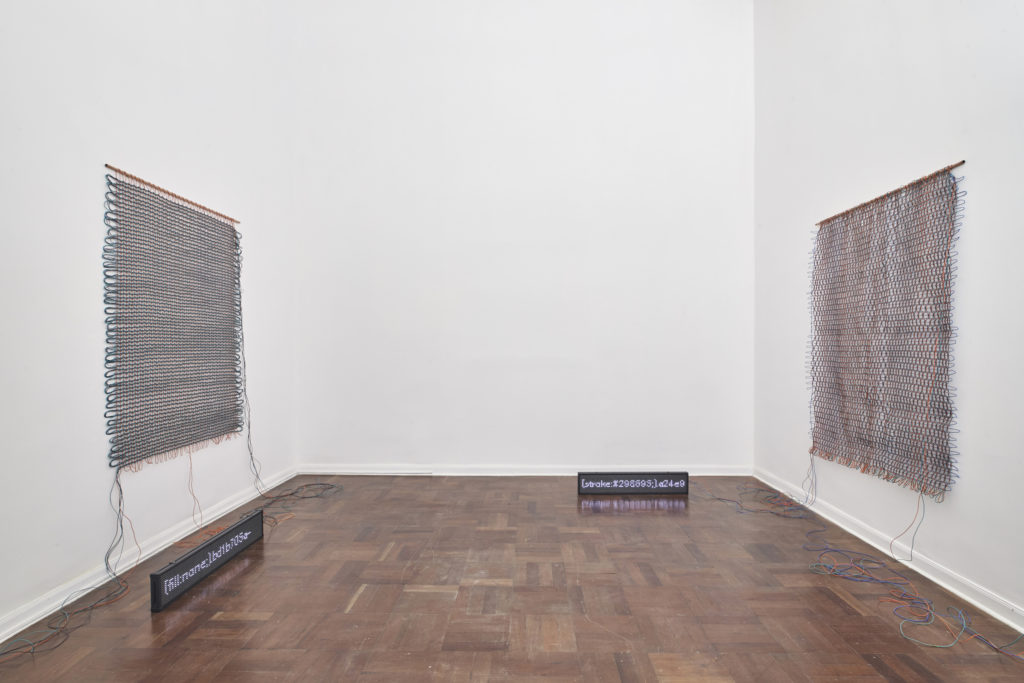
Redes de conversión presents a series of textiles made with insulated copper wires, creating patterns and designs based on primary structures of pre-Columbian weaves.
During the elaboration of these pieces, a basic language was developed that represented the action of weaving (and twining) of the cables. By analyzing the weft and warp of each of the pre-Columbian textiles, the repetitions of shapes and colors were transcribed into a written notation system, in order to identify the basic patterns, and thereafter represent their essence. This language – initially represented by diagrams, arrows, numbers, and codes in handwritten notes – was shared with a group of system programmers to be “translated” into a logical programming code. The weaving patterns were interpreted as constants, to then develop a language based on commands through java script (one of the most used programming codes nowadays). In the case of the textiles with twining elements, a graphic program was used to convert the interlaces and knots to a vector system, translating them into code.
During the elaboration of these pieces, a basic language was developed that represented the action of weaving (and twining) of the cables. By analyzing the weft and warp of each of the pre-Columbian textiles, the repetitions of shapes and colors were transcribed into a written notation system, in order to identify the basic patterns, and thereafter represent their essence. This language – initially represented by diagrams, arrows, numbers, and codes in handwritten notes – was shared with a group of system programmers to be “translated” into a logical programming code. The weaving patterns were interpreted as constants, to then develop a language based on commands through java script (one of the most used programming codes nowadays). In the case of the textiles with twining elements, a graphic program was used to convert the interlaces and knots to a vector system, translating them into code.